Practical Tips For Saving Money On Fresh Produce
Eating plenty of fruits and vegetables is one of the best ways to support a healthy lifestyle, but anyone who shops regularly knows those colorful bins of berries, leafy greens, and crisp veggies can quickly add up. As someone who truly feels that a meal is not complete without at least one veggie (and probably a salad too), I buy a LOT and have learned a thing or two about saving money on fresh produce!
It’s more than smart grocery shopping. It also involves understanding what’s in season (and why that matters), knowing how to properly store fresh produce, and having a collection of go-to seasonal recipes and simple vegetable sides when you’re in a pinch.
Speaking of savvy shopping, it’s a popular topic here on the blog. Be sure to check out my tips for grocery shopping on a budget, stocking up on the least expensive foods, and how to prevent food waste, because we don’t want our hard-earned dollars going in the trash!
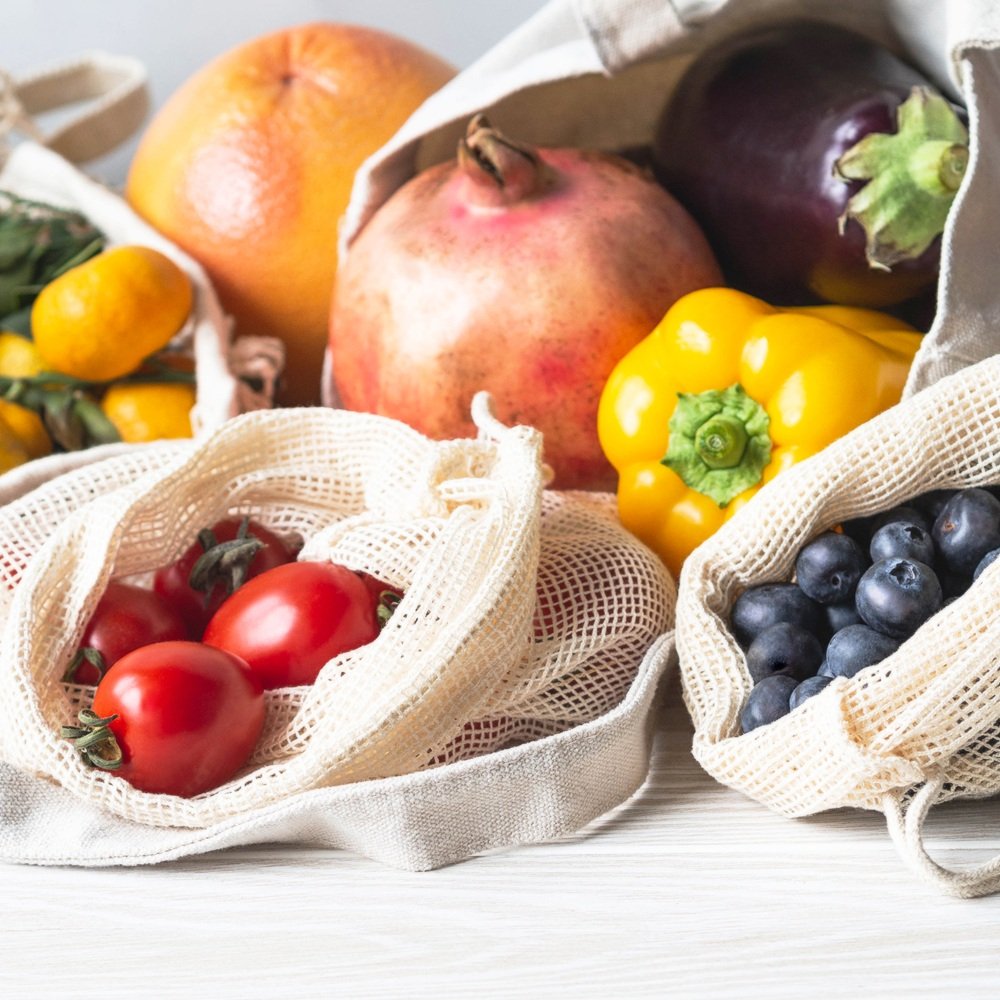
Saving money on fresh produce isn’t just about savvy shopping. It’s the leading category of food waste in households, often due to over-purchasing and spoilage from its short shelf life. From the time it’s picked, processed, arrives at the grocery store, and makes it to your table, it’s already weeks old. I can give you all my best tips and tricks for saving money on fruits and vegetables, but you’ll inevitably find yourself with more than you need, so be sure to read to the end, where I’ll share some of my favorite ways to use it up.
Incorporating more fruits and vegetables is one of the simplest ways to improve overall health. Produce is also one of the best natural sources of fiber, a nutrient that supports digestion, helps balance blood sugar, and keeps you feeling full longer. Speaking of fiber, I recently wrote about how increasing fiber significantly improved my health.
Saving Money On Fresh Produce
Buying in-season produce is cheaper, tastes better, and is more nutritious than out-of-season alternatives. One reason is that it’s more plentiful, so there is more of it to cycle through. Be flexible and adapt to what’s in season and more affordable, rather than what you want.
Shop weekly ads and plan your grocery budget around what’s on sale. Your family might love strawberries, but if they’re not on sale that week and apples are, buy the apples.
Asian markets have ridiculously low prices on produce and fresh herbs. Like…crazy low. If you’ve never been to one, I encourage you to go see what deals you can find. This is my go-to place for buying fresh herbs and other unique produce, such as baby bok choy.
Prep it yourself. We’ve all seen those containers of already prepped produce that’s ready to use. They’re convenient, but they come at a high cost. Just today, I saw a package of diced onions at Publix for $3.29. A whole red onion was 89¢. It takes three minutes to dice an onion. This one is a no-brainer. If you want to buy it already prepped, head to the frozen aisle where it’s much cheaper.
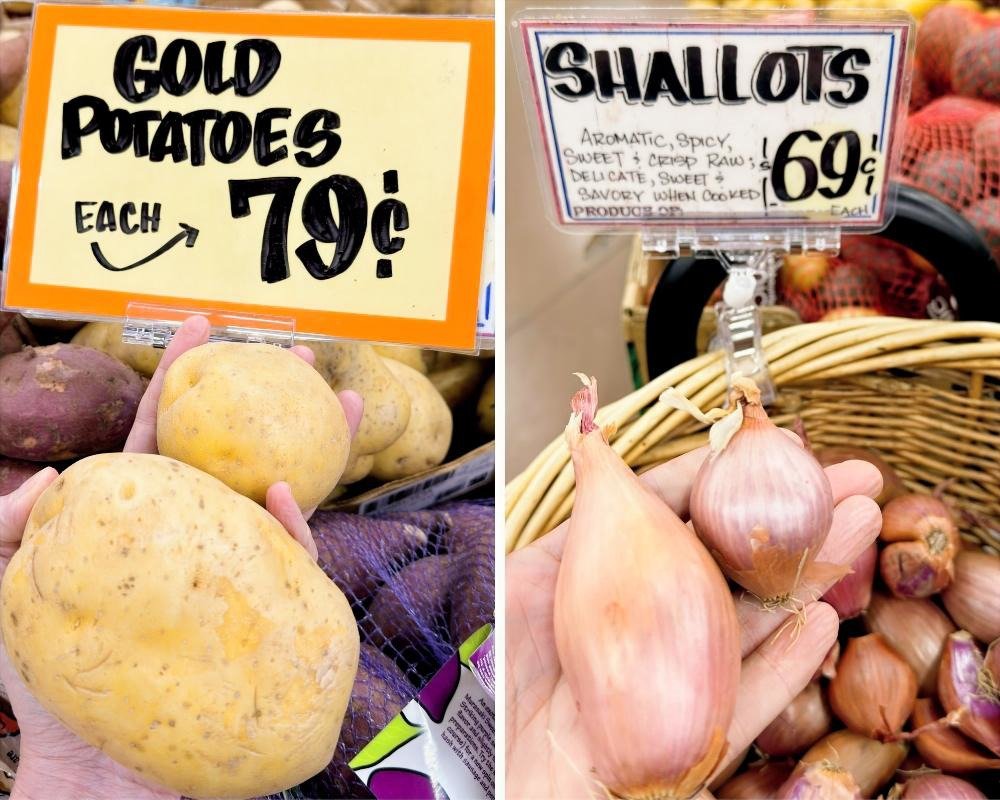
Buy the bigger size. If something is priced as “each” and not “per pound”, look for the biggest ones to get more for your money. In the picture above, you can clearly see the size difference. It may not seem like a significant savings, but for someone who cooks for one person frequently, like me, it’s the difference between having enough for one meal and possibly two or three. When buying bags of produce, choose the larger bag. Even though the weight is the same, a bag with six smaller apples will last longer.
Farmers’ markets have some amazing deals on produce, but they can also be a money trap. Try not to get sucked into all the fun things and stick to only what you need. The main benefit of buying from local farms is that it supports small businesses, and you’ll likely receive produce that was just picked and will last longer, helping prevent waste and save money.
Shop at discount stores like Aldi and Save-A-Lot. For produce specifically, I find the prices unbeatable and the quality superb. This varies by store, but the Aldi I shop at in Nashville consistently offers higher-quality produce than Publix and Kroger at much lower prices.
Use coupons. Almost every grocery store these days has a loyalty program and a mobile app to go with it, where you can scan weekly sales ads, save digital coupons, and redeem loyalty discounts. My favorite time to do this is when I’m watching TV. It’s an easy, low-effort way to save money on groceries, including produce!
Miscellaneous Tips
- Grow your own garden, join a local co-op, or go to u-pick farms, and use coupons.
- Sign up for newsletters of your favorite produce brands for coupons and discounts.
-
Grow your own. I use a LOT of fresh herbs. Having window sills has saved us so much money!
-
Properly store fresh produce to extend its lifespan. Click here for a simple list and a free printable.
-
Compare unit pricing instead of package pricing. Sometimes what you think is the better deal isn’t.
-
Buy less. It’s easy enough to stop at a grocery store if you need something, which helps reduce waste.
How To Keep It From Going Bad
As promised, here is exactly what I do with produce that’s about to go bad.
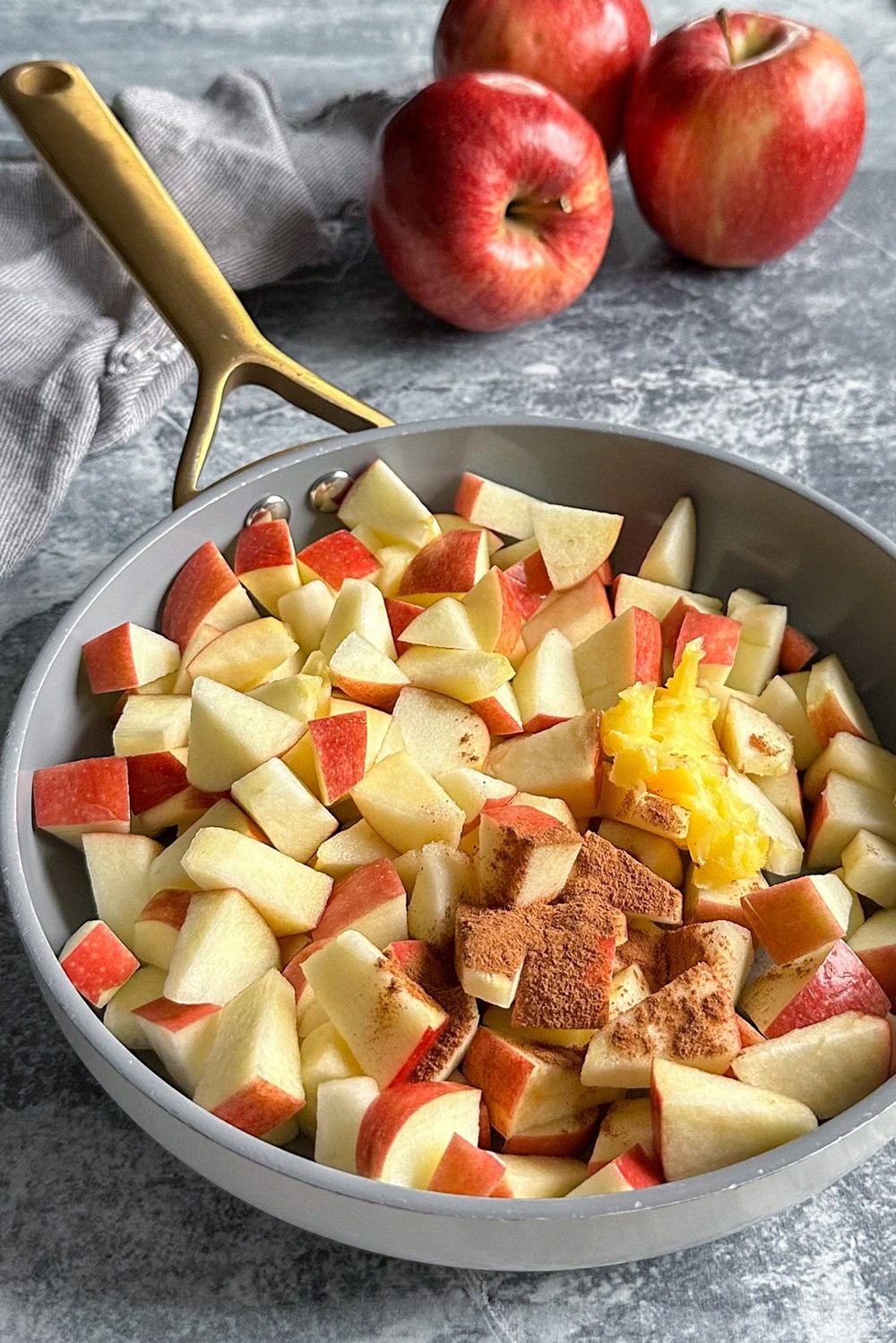
Just cook it. A quick cook will often buy you several more days. The trick here is to keep it simple. Just yesterday, I microwaved a potato to prevent it from ripening. I also had bell peppers that needed to be used, so I cut them in half, removed the core, rubbed them with olive oil, and placed them in the air fryer. It took two minutes, and now they will be fine for a few more days. My cooked apples (shown below) take just five minutes to prepare and can be enjoyed for breakfast, as a snack, or as dessert. You can find the recipe here.
Freeze it. Most produce freezes without blanching. If you hate blanching as I do, cook it, let it cool, and freeze it. One of my favorite things to freeze is fresh greens, like kale and spinach. They can go directly from the freezer into a pot of soup, smoothies, or casseroles. Once they’re frozen, you can actually crush them with your hand and voilà, no chopping necessary.
I hope this post has provided helpful ideas for saving money on fresh produce. If you have any suggestions, please share them in the comments below!